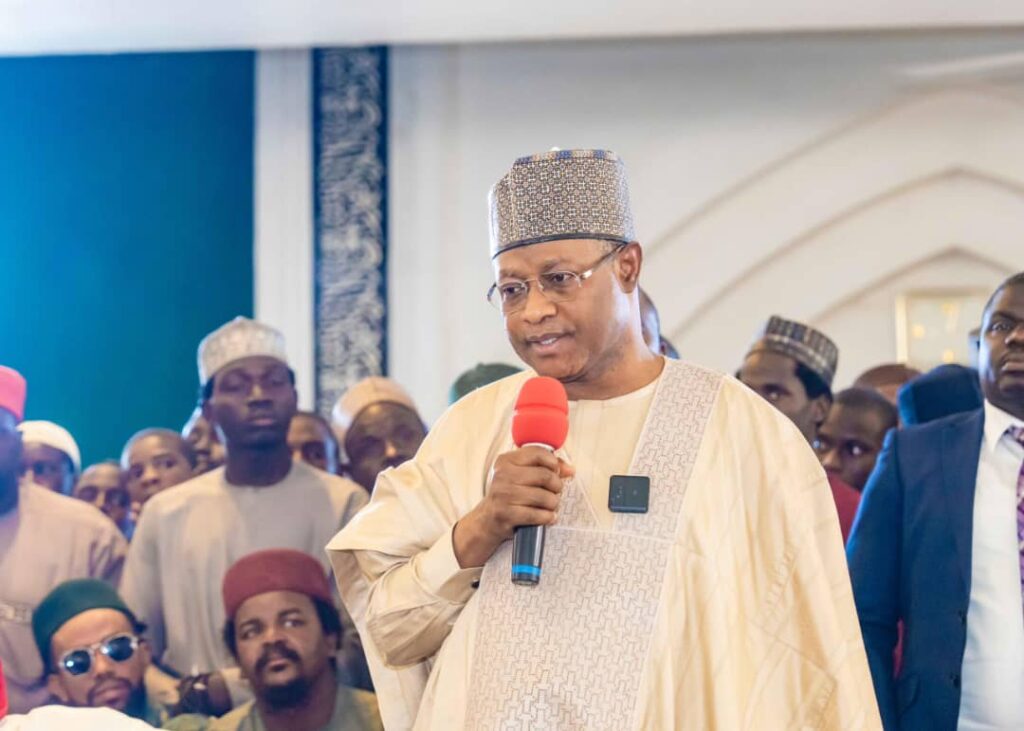
FACTS AGAINST REVISIONISM IN KADUNA ROAD GOVERNANCE
Recent attempts to trivialise or distort the scale of road development under Governor Uba Sani amount to little more than selective amnesia and policy revisionism.
The facts are neither ambiguous nor contestable. In under two years, Governor Uba Sani has awarded 140 road contracts spanning approximately 1,300 kilometres, with 66 roads already completed across urban, rural, and historically neglected communities.
This achievement, delivered within fiscal restraint and social sensitivity, decisively outperforms the lived infrastructural impact of the preceding eight years.
Critics who invoke the el-Rufai era conveniently conflate visibility with value. While the former administration invested heavily in metropolis-centric road aesthetics, its eight-year record failed to produce a demonstrable, statewide spread comparable to what has been achieved in less than a quarter of the time under Governor Uba Sani.
More troubling was the governance style that accompanied those projects mass demolitions, livelihood disruption, and social alienation which eroded public trust and reduced infrastructure to symbols of coercion rather than instruments of shared progress.
Governor Uba Sani’s model is structurally different and morally superior. Roads are delivered without displacement, projects are completed rather than abandoned, and communities are engaged rather than subdued. Equity, access, and continuity not spectacle define the administration’s infrastructure philosophy.
This is governance measured not by flyovers alone, but by market access, farm-to-road connectivity, security reach, and social stability.
The Citizens Support for Good Governance (CSGG) therefore rejects all false equivalence between two years of people-centred delivery and eight years of exclusionary urban bias. CSGG affirms Governor Uba Sani as a clear model of the Renewed Hope Agenda and a Northern leader whose authority is derived from restraint, inclusion, and measurable outcomes not administrative aggression.
This institutional position was formally stated by Adeosun Olayinka Olumide, National Coordinator of CSGG Nigeria; Alhaji Hamisu Danbaba Malumfashi, Northern Coordinator of CSGG; and Victor Mathew Bobai, Director of Media and Public Affairs of CSGG, who emphasised that facts, not nostalgia or sentiment, must frame the Kaduna infrastructure debate.
In the final analysis, the choice before the public is stark: infrastructure that looks impressive but fractures society, or infrastructure that quietly transforms lives. Governor Uba Sani’s record leaves no doubt where history and the people stand.
Acknowledgement:
Suleiman Abubakar, Kinkinau.